Inspired by a Christmas hat-buying spree, writer Sarah Thomas burrowed deep into the world of felt hats. It’s part fashion investigation, part ethical quandary, part hat-lovers’s guide. Before you add one to your gift list this year, give this a read.
Sometimes buying gifts with the best intentions raises bigger questions than you expect.
That’s what happened when Brittanie English, founder of Britt’s List, bought three Akubra’s for Christmas last year – one each for her husband, her father and herself. They seemed like the perfect gifts: thoughtfully made, stylish, practical. The kind of thing that wears in with time and tells a story of its own.
I, on the other hand, rarely wear hats, and I am envious of anyone who can pull them off. Under a cap, my hair sous-vides in sweat and emerges both flat and frizzy, like Velcro loops. And the less said about my Grace Kelly-inspired silk headscarf Pinterest searches, the better.
But there’s something about a felt hat that goes beyond fashion. Its utility has become the aesthetic: the appeal of an Akubra is that it may confer its toughness to the wearer. Does the Akubra-wearer worry that their head is comically large, that their hair is steaming hot ramen noodles? I hope not. I would like to wear an Akubra and be insouciant. I thought of tipping the hat rakishly over one eye, or wearing it low on the brow to keep the mosquitos away as the cattlemen might.
The models you see in hat campaigns know what they’re selling. They are rugged, stoical. Their faces are masterful, taut-lipped and clear-eyed. They look like they give firm handshakes. They are resigned to acting out Australiana for city dwellers like me.
Still, I found myself clicking aimlessly around the website, idling time away, trying to justify the purchase. I care too much about what other people think of me; maybe wearing an Akubra was the cure. I would look very silly wearing a big hat in the city, in the suburbs, but why should I care? Akubra hats are expensive, yes, but they’re made locally by a heritage Australian brand. And imagine the cost-per-wear!
I knew that Akubra used natural materials – probably wool, I reasoned. To me, wool made a good deal of sense for Akubra. The brand has yoked itself to the romantic ideal of the outback cattleman. Akubra’s best-selling Cattleman hat is named after him, lest we forget its contribution to our national identity. I played the word association game: Dust, sweat, cattlemen, shearers, wool.
With Australian manufacturing in freefall, Akubra is a rare holdout. So what is its secret? The all-Australian image, the quality, the name recognition?
If you’re superstitious, the answer might be a lucky rabbit’s foot. Several million or so.
This is because Akubra hats are made from “100% rabbit fur felt.” Brittanie discovered this on the Akubra website, after she bought her three hats. Then she read elsewhere that a single hat requires at least twelve rabbit skins. Had she effectively slaughtered all the main characters of Watership Down plus many warrens’ worth of extras?
What else to do but ask Instagram for absolution: Is rabbit fur really less ethical than sheep’s wool? It’s more startling by virtue of being less common, and for the sheer volume of animals destroyed to produce an expensive piece of headgear.
A number of people noted that rabbits are an invasive species and regularly culled as pests. Point one to rabbit fur.
“As a First Nations woman, I’ve been taught to respect and care for animals and country,” read one comment. “Seeing the destruction foreign species have made to this country makes me less inclined to have an issue with this.”
The wool industry is not the humane alternative. Sheep bred for wool are eventually killed for meat; some are slaughtered as lambs. The individual fibres in those shaggy coats thin and weaken as they mature, and like mutton, wool from an old sheep is less desirable. Animal rights activists call Cruella on both rabbit fur and sheep’s wool.
To its credit, Akubra promptly settled one question. The brand left this comment on Brittanie’s Instagram reel: “To clarify, the rabbit fur we use is a byproduct of the meat industry, ensuring that no part of the animal goes to waste. This approach reflects our commitment to responsible sourcing and minimising environmental impact.”
Akubra also promised to update the website “to better showcase our values, processes and the story behind our hats.”
So what do you do if you want a felt hat that lasts, and that is produced in a way that is gentle to both animals and the environment? At the very least, talk to someone who knows about hats. Better yet, talk to someone who makes hats.
“If you’re worried about ethics, sustainability, slow fashion, getting the best quality possible, and buying local-made … then you really can’t beat working with a custom hatter rather than a mass-produced factory hat,” commented master hatter Blake ‘Blakesby’ Canham-Bennett.
Canham-Bennett agreed to answer our questions in an interview from his Adelaide studio, where he makes and sells his designs as Blakesby Hats. Canham-Bennett is a fresh-faced traditionalist with more than a decade of hat making experience. He was happy to tell me the things most people don’t know about the hat industry, and what he wishes they did.
Like Akubra, Canham-Bennett favours rabbit fur felt for his designs. He admits that he doesn’t have the luxury to filter materials for traceability or sourcing standards – the industry is small, and suppliers are limited.
“Wild-sourced rabbit fur is great, but it’s simply not practical for felt factories,” he says. “Rabbits are an over-populated pest in Australia, but to my understanding, large-scale manufacturers outsource fur because relying solely on wild-sourced fur isn’t commercially sustainable.”
Rabbit fur felt is the standard, but he also works with beaver, nutria and sometimes straw or plant fibres. He says the choice of fibres has remained largely unchanged over the past century. (There’s little need for innovation in hatmaking, at least on this scale; Blakesby Hats belongs to an old world tradition of artisans and craftsmen. In the new century, hats have receded from view like the hairlines they gilded.)
“Don’t fix what isn’t broken” sums up Canham-Bennett’s position on the use of fur felt for hats. “Could you make a felt hat from a kangaroo? Sure, but you’d have to find a factory willing to do it,” he says.
He’s also bearish on non-animal felts. “In time, other options may present themselves. But in this trade, you don’t have the privilege of choice. Hatters use fur felt because no other fibre can match the standard of quality.”
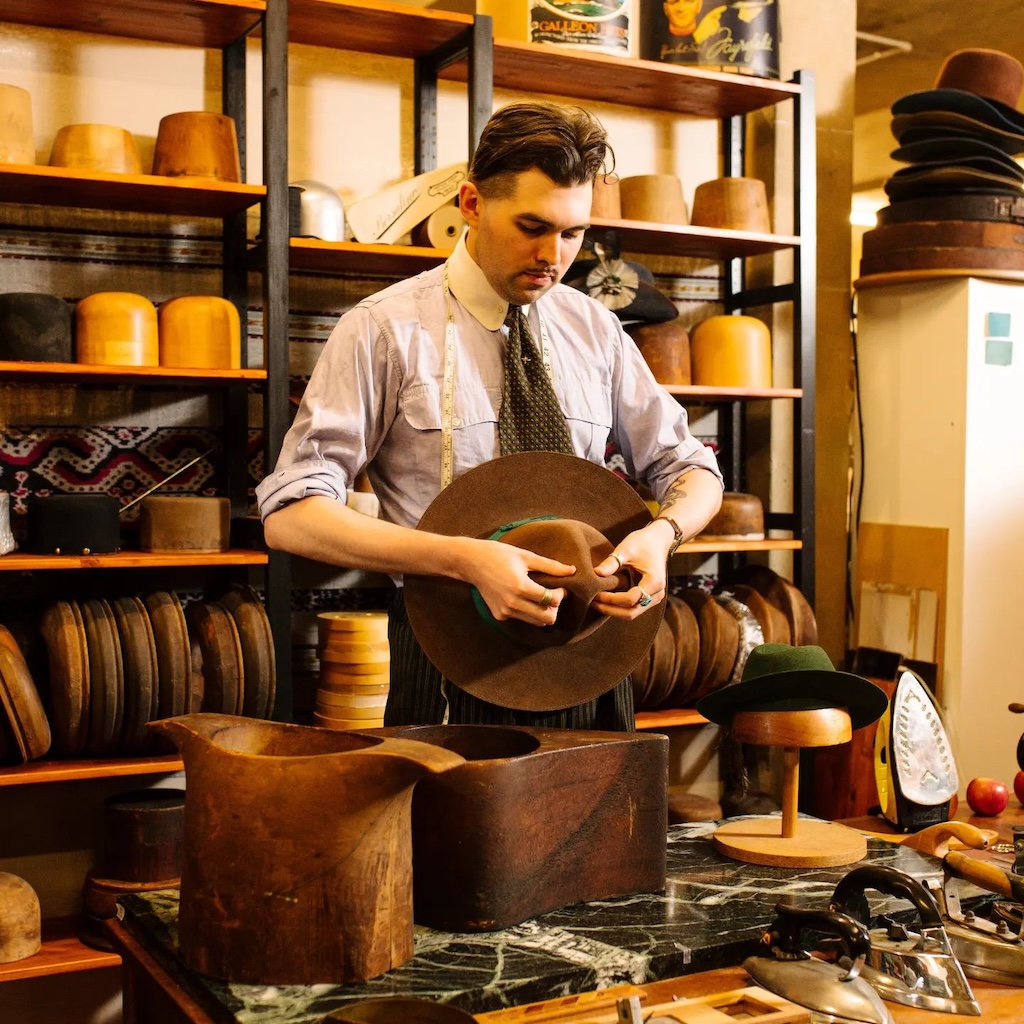
Fur felt and wool felt have different properties. Canham-Bennett tells us fur felt is a vastly superior material, owing to the strength of the raw fibres. He says that a rabbit felt hat will last a lifetime, easily surviving reshaping, reblocking, repairing, resizing and the successive replacing of sweatbands. And hats made with premium beaver fur felt edge into “ancestral family heirloom” territory: Like diamonds, beaver felt is forever.
Wool felt hats come in for the brunt of Canham-Bennett’s professional scorn. They’re sold at every price point, from cheap and accessible to “wildly overpriced” luxury offerings, but he says all wool felt hats have something in common: They won’t last more than a few years of wear.
“Wool felt isn’t durable and it has very low longevity,” he explains. “It ages poorly, it pills and it’s essentially ruined if you get it wet.”
As for the ethical dilemma, he points to the difference in price between fur felt hats and wool felt hats. Wool hats start much lower – low enough to sound alarm bells. That’s because they cost so little to produce that brands can play Limbo with the price of wool hats and still enjoy wide profit margins. According to Canham-Bennett, their relative affordability is down to inferior quality and longevity, not to mention unsavoury cost-cutting business practices.
Whether ethically or financially motivated, he says consumers should think twice before choosing what looks like the cheaper option: “These brands are mass-manufacturing hats which won’t last a fraction of your lifetime. Is it more ethical to buy ten wool felt hats or one fur felt hat? And if it will last a lifetime and beyond, and is made from natural fibres which will deteriorate sustainably, then is that not inherently ethical?”
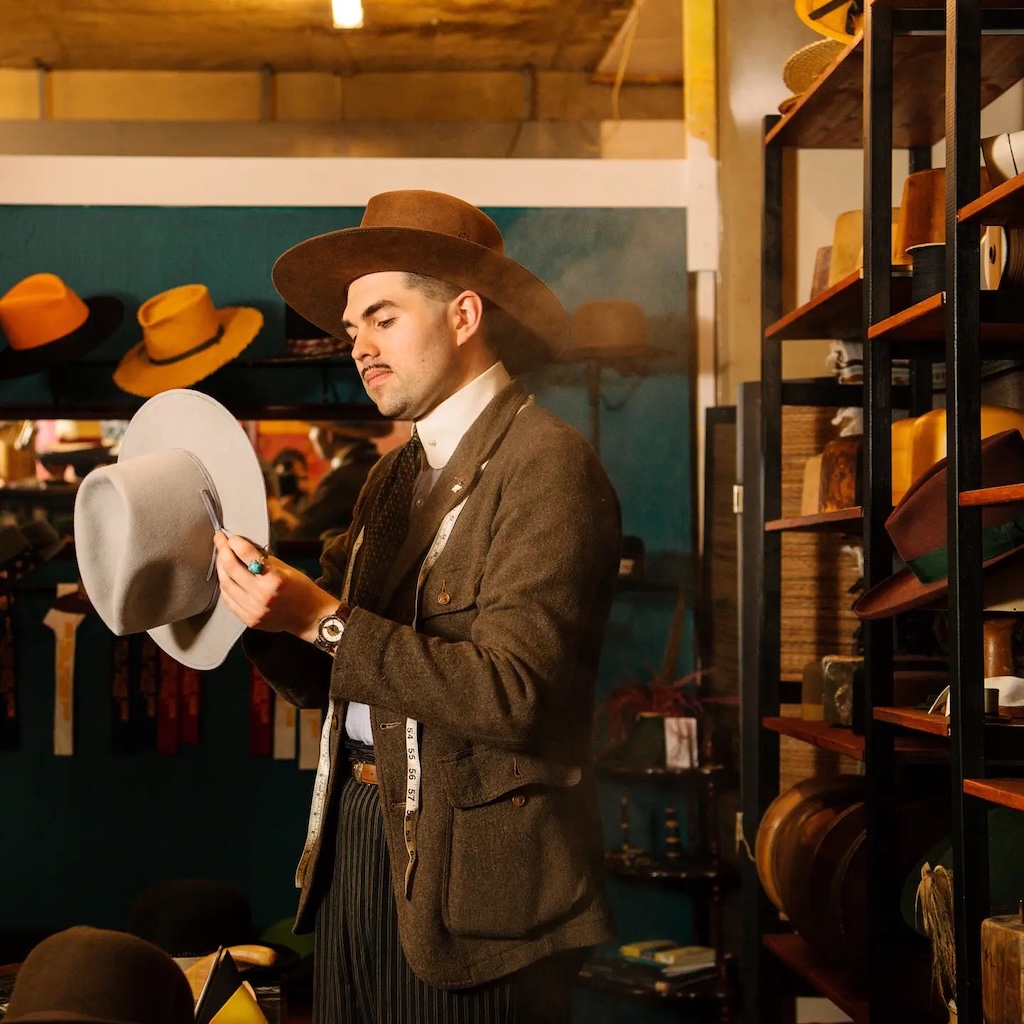
Understandably, Canham-Bennett places a high premium on hats made with passion by skilled artisans.
“Legacy brands dominate by way of heritage, name recognition, nationalistic pride, and perceived quality,” he says. “Buy from a legacy brand if you want a decent hat, sure. But if you want the finest quality hat made in Australia – well, then, I’m right here when you need me.”